

What we are called out to most in Iron Station
The faults themselves do not change much across the metro, but the mix does, and it tracks the housing above. Roughly 75% of North Carolina homes heat water electrically, which makes an element or thermostat the single most common failure here as everywhere else. Both are $150 to $250 repairs.
- No hot water on an electric unit: a tripped high-limit reset or a failed element. Repeatedly pressing the red button re-arms a safety device against a live fault.
- Pilot will not stay lit on a gas unit: five realistic causes, and only one of them is the thermocouple everyone reaches for.
- Hot water runs out fast: a dip tube, a dead lower element, or a tank simply undersized for a household that has grown.
- Weak hot water with normal cold: a heat trap nipple or a shutoff left partly closed after other work. In Iron Station it is worth separating this from the supply-line question above before anyone quotes you.
- A dripping relief valve: frequently a pressure problem rather than a failed valve. See leak repair.
What Iron Station itself changes
The housing in Iron Station
Iron Station is unincorporated Lincoln County rather than a town, and the housing is rural: older properties on land, newer builds on large lots, and very little of the uniform subdivision stock that makes the rest of this region predictable. There is no single typical Iron Station water heater, which is exactly why we ask more on the phone here than we do almost anywhere else on this list.
Where the heaters sit
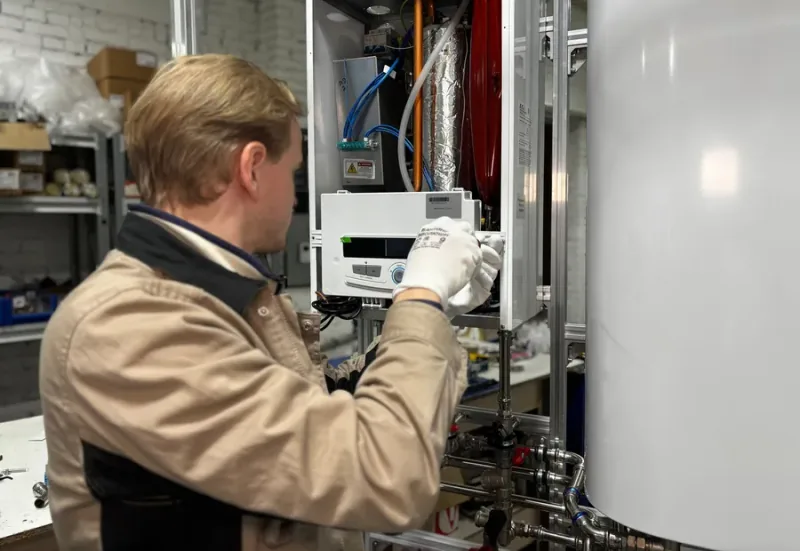
Utility room, crawlspace and garage, and on the larger properties sometimes an outbuilding or a detached utility space. That last case changes both the freeze risk in winter and where the discharge pipe can legally terminate, and it is worth mentioning when you call.
The pipe era
Genuinely varied with the build years. Older rural properties can still have galvanised supply, which restricts hot and cold together and will not be improved by a new tank.