



Descaling on Denver water
Manufacturers write one descaling interval for the whole country, and it is set for hard water. Yours comes from the Lincoln County system, drawn from Lake Norman, and where that supply is soft the exchanger fouls considerably more slowly than that schedule assumes.
We will tell you honestly where you sit on that, because the alternative is descaling a unit annually that does not need it. Two caveats worth knowing before you skip it entirely: some manufacturers require documented annual servicing to keep the heat exchanger warranty valid, which is worth more than the service costs, and a property on a private well is a completely different conversation from one on the municipal supply.
- Descale on an interval that matches your actual water rather than the manual's default.
- Inlet filter clean, which is the most commonly skipped job and the cheapest.
- Flow rate and combustion check, so a declining unit is caught before it fails in January.
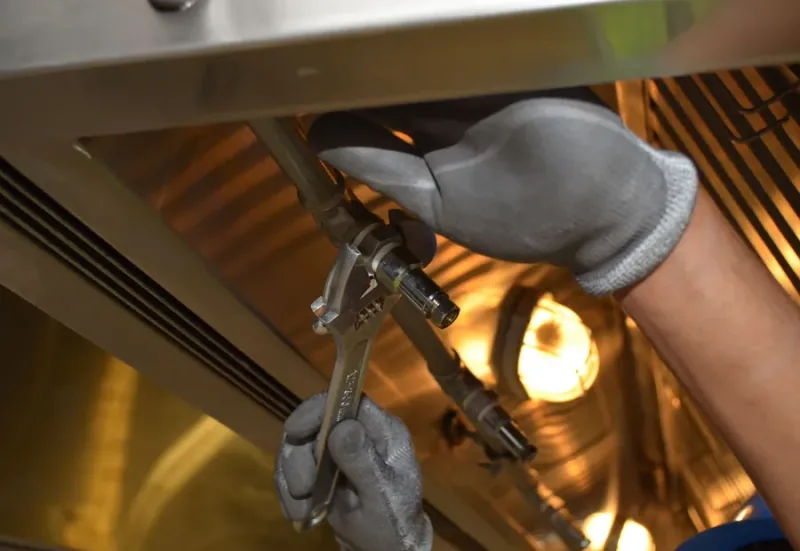
What Denver itself changes
The housing in Denver
Denver is the Lake Norman end of Lincoln County and it has grown accordingly: large newer houses on large lots, built in concentrated waves from the 2000s onward, with the older rural properties that were here first scattered between them. The newer stock is now arriving at first replacement more or less together, and the larger the house the more likely the original tank was undersized for how the household actually ended up using it.
Where the heaters sit
Garage and utility room in the newer building, with attic installs in the larger two-storey houses. On the bigger lots the run from heater to the furthest bathroom is long, which is a recirculation question rather than a fault, and worth separating before anyone sells you a bigger tank.