



Before you replace it in Gastonia
Our published rule applies here exactly as it does in Charlotte, and it is the same rule whoever answers the phone:
- Under 8 years old: we repair it. Elements, thermostats, gas valves and dip tubes are serviceable parts on a tank with years left in it.
- 8 to 12 years old: we repair it if the fix lands under about $500. You are risking $250 to defer $2,000.
- Leaking from the tank body, at any age: replace it. A perforated tank cannot be patched.
What decides which of those you are in is partly the water. Yours comes from the City of Gastonia, drawn from Mountain Island Lake, and that is the supply whose chemistry has been working on the inside of your tank for its whole life. Where the water is soft and lightly buffered it corrodes rather than scales, which means tanks end by anode depletion and perforation rather than a slow decline. A leak from the shell is a genuine end-of-life signal here rather than something to nurse along.
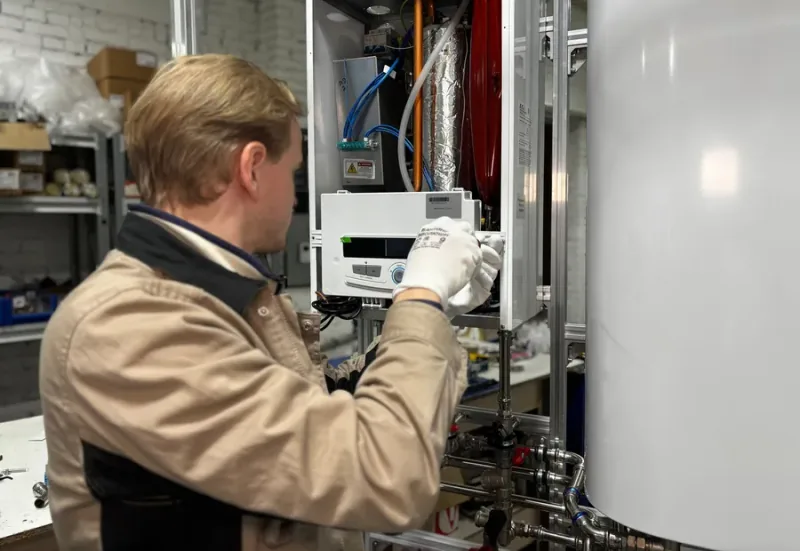
What Gastonia itself changes
The housing in Gastonia
Gastonia has genuinely older housing than Charlotte, and that changes the work. 52.4% of the stock predates 1980 against a Mecklenburg median around 1997, and Gaston County's own comprehensive plan identifies the county as holding the region's largest share of aged housing. In practice that means more third and fourth cycle replacements, more tanks that have never had an anode rod checked, and more properties where the drain valve will not survive its first flush. It also means a more price-sensitive market, and we price and explain accordingly.
The pipe era
A genuine galvanised layer in the pre-1960 stock, which corrodes inward and restricts the whole house rather than just the hot side. Copper through the 1960s to 1990s, and polybutylene in the 1980s subdivisions. If your complaint is that pressure has been getting steadily worse for years across both hot and cold, galvanised supply is the likely answer and that is a repipe conversation rather than a water heater one.